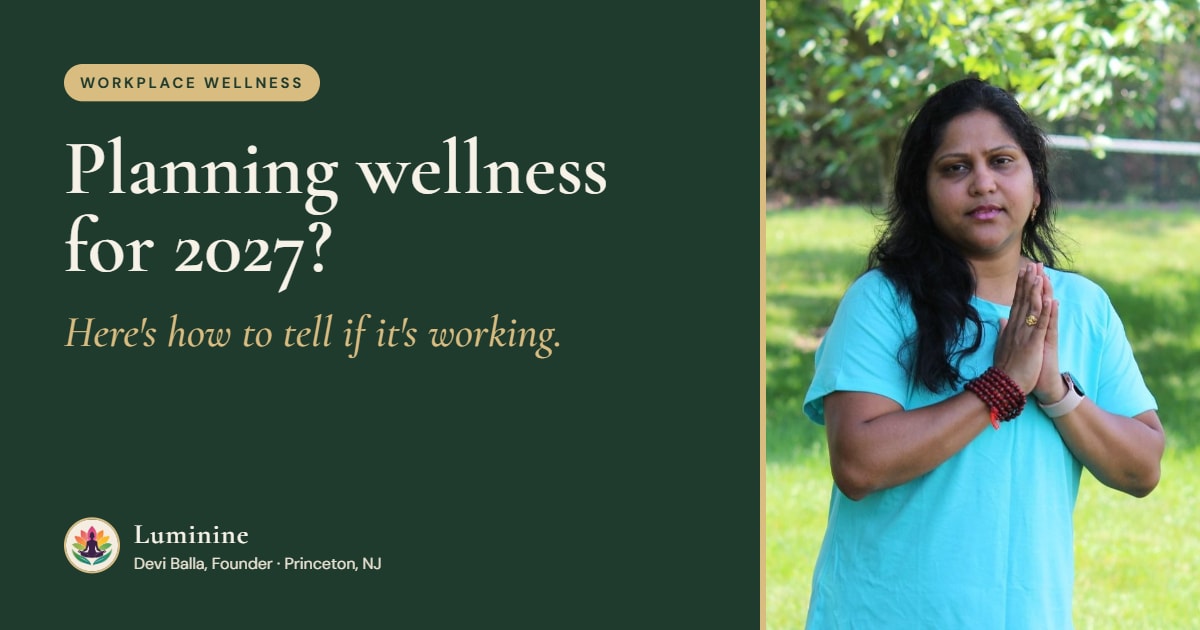
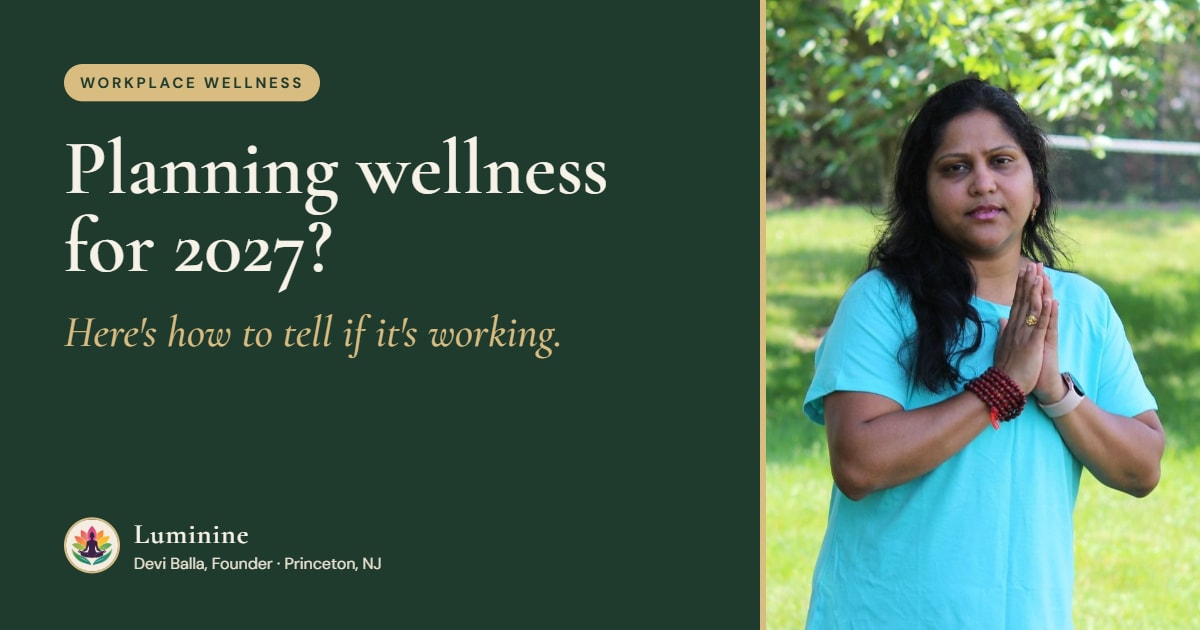
Planning Wellness for 2027? Here's How to Tell If It's Working
Every manager who books a wellness session eventually asks the same question: is this actually doing anything?
It's a fair question. Most small and mid-sized teams don't have a benefits analyst or a dashboard. They have a budget line, a busy calendar, and a gut feeling. After a few months of teaching weekly classes on-site at a company near Princeton, I've learned that you don't need a big survey to see whether it's working. You need to know what to watch for.
1. Do people come back?
Attendance on the first day tells you about curiosity. Attendance in week six tells you about value. In my weekly classes, the people who come once tend to keep coming. Nobody is required to be there. They come back because they felt a difference and want it again.
2. What do they say without being asked?
Unprompted comments are better than any rating scale. In my classes I hear things like "I felt relaxed for the rest of the day" and "my back doesn't ache the way it did." One regular, who was completely new to yoga, shared that his pain had eased and he was sleeping better.
3. Do they bring someone with them?
When employees start encouraging coworkers to sign up, the session has moved from "a perk" to "something I recommend." That kind of word of mouth is hard to fake.
4. Do they ask for more?
The clearest sign I've seen is when participants ask whether I could run a session just for their own team. When people want to share something with the colleagues they sit beside every day, it has become part of how the team handles stress.
5. Try a two-question check-in
If you'd like something you can write down, keep it simple. At the start of a session, ask everyone to rate their neck and shoulder tension from 1 to 10. Ask again at the end. Do it for a few weeks and you'll have your own small record of change, collected in under a minute.
How I set this up with teams
When a team reaches out to me, I start with a few questions: how much time people realistically have, whether we'll be in a conference room or on Zoom, and what the team is feeling most, whether that's back and neck tension, stress before deadlines, or poor sleep. From there we choose a format that fits, from a 15-minute seated reset at a standing meeting to a weekly class or a workshop series. I suggest a simple check-in like the one above from the very first session, so after a few weeks the manager has something real to look at and we can adjust together.
What this means for your team
Wellness rarely shows up as one dramatic number. It shows up in who keeps coming, what people say on their way out, and whether they start asking for more. If you're planning for 2027, choose something that repeats, and decide up front which of these signs you'll watch for. You'll know within a couple of months whether it's earning its place on the calendar.
Satyavathi (Devi) Balla is the founder of Luminine LLC in Princeton, offering yoga, breathwork, and face rejuvenation for workplaces in person in New Jersey and virtually nationwide. theluminine.com
Images